
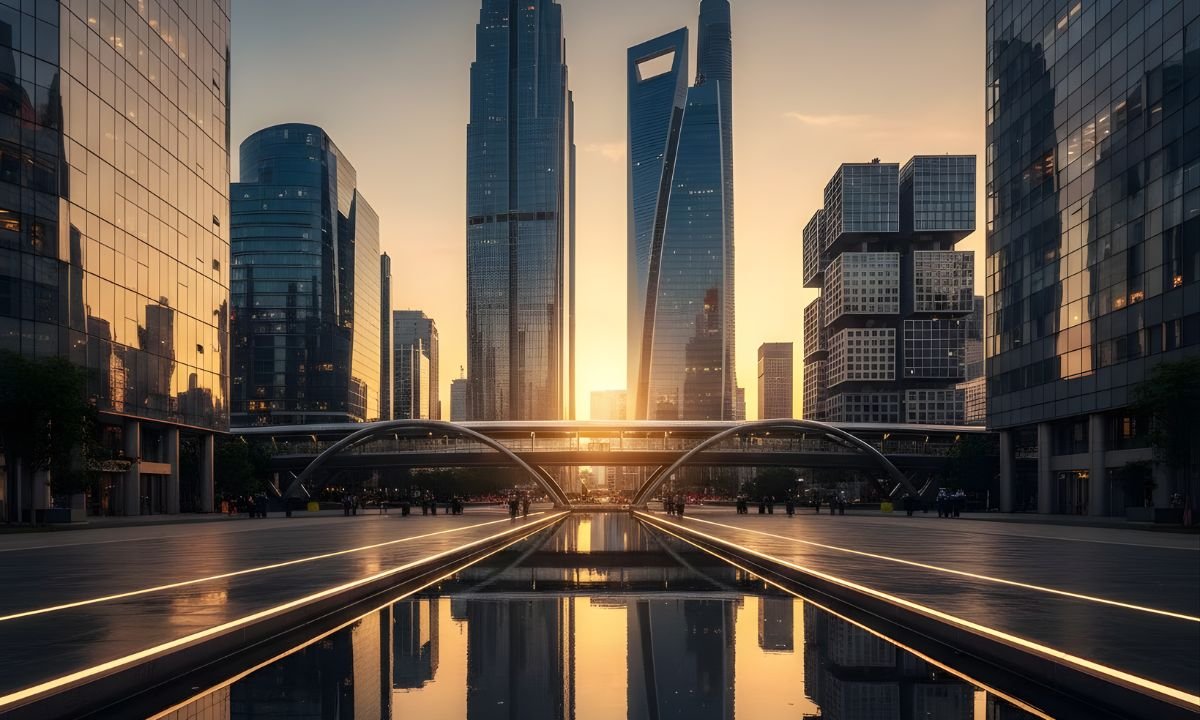

Urban symmetry is one of the most striking ways to understand how modern cities balance creativity, order and human experience through architecture. It turns streets, skylines and public spaces into visual rhythms that feel both calming and futuristic at the same time.
Understanding Urban Symmetry in Modern Cities
Urban symmetry in architecture refers to the deliberate repetition, mirroring and alignment of forms in buildings, streets and public spaces to create visual balance. In contemporary cities, this can be seen in glass facades that reflect each other, grid-like window patterns, and plazas framed by matching towers on either side. Designers use symmetry because the human eye instinctively reads balanced structures as more stable, elegant and trustworthy, which is why so many civic buildings, museums and financial districts rely on symmetrical compositions to signal authority and permanence.
At the same time, symmetry in modern architecture rarely means rigid sameness across an entire city. Many contemporary projects combine symmetrical building fronts with asymmetrical skylines, unusual angles and playful materials to keep spaces visually interesting. This mix of order and surprise helps urban environments feel both coherent and alive, especially in global cities where diverse cultures and eras collide in a few blocks.
Why Symmetry Attracts the Modern Photographer
For photographers, urban symmetry is like a ready-made composition guide built into the city itself. Clean lines, repeating columns, mirrored facades and central vanishing points naturally lead the viewer’s eye into the frame, making even a casual smartphone photo look intentional and professional. Carefully centered crosswalks, escalators, subways and bridges offer strong leading lines that work perfectly for vertical formats popular on modern platforms and mobile news feeds.
Symmetrical architecture is also ideal for storytelling in a digital environment shaped by the February 2026 Google Discover update, which now gives more visibility to original, high-quality visual content and discourages clickbait. Photographers who pair strong symmetrical images with honest, informative descriptions of local buildings, neighborhoods and design choices are better aligned with Discover’s focus on in-depth, trustworthy and locally relevant experiences.
Patterns, Reflections and Hidden Geometry
One of the most rewarding aspects of exploring urban symmetry is learning to see invisible geometry hidden in everyday structures. Rows of balconies, grids of office windows, and repeating balcony railings can create mesmerizing patterns when framed tightly or shot from below, turning ordinary residential towers into graphic, almost abstract compositions. In riverfront or coastal cities, glass curtain walls and water surfaces double these patterns, so a simple reflection can transform a building into a perfectly mirrored, almost surreal object, as demonstrated by well-known “urban symmetry” photo series of European riverbank architecture.
Even small details contribute to this geometric harmony. Streetlights placed at regular intervals, evenly spaced trees along a boulevard, or metro entrances lined up in a row can all serve as anchors for symmetrical shots. When photographers position themselves at the exact center of a street, bridge or courtyard, they can turn these micro-patterns into powerful images that highlight how carefully (or carelessly) a city has been planned for human movement and sightlines.
Key Elements of Urban Symmetry (Data Table)
Global Perspectives: Local Flavors of Symmetry
While symmetry is a universal visual language, it looks different in every part of the world. European capitals often showcase classical and neoclassical facades with strict left-right balance, colonnades and uniform cornice lines, making them ideal for front-on architectural portraits. In contrast, many Asian megacities highlight vertical symmetry through high-rise clusters, multi-level walkways and glass towers that repeat similar forms dozens of stories into the sky.
Middle Eastern and North African cities may emphasize ornamental and geometric symmetry in courtyards, arches and latticework, drawing on deep traditions of pattern and proportion. Meanwhile, newer planned districts in regions like the Gulf or parts of East Asia prioritize perfectly aligned boulevards, central business districts and waterfront promenades, creating sweeping symmetrical vistas when photographed from drones, rooftops or elevated transit lines. This geographic diversity is particularly valuable under the newest Google Discover emphasis on local relevance, where content that clearly roots its stories in specific countries and regions is more likely to match user interests.
Symmetry, Safety and Trust in the Built Environment
Symmetry is not only an aesthetic choice; it also signals safety, clarity and usability in urban design. Clearly aligned pathways, well-marked crossings and balanced lighting layouts help pedestrians and cyclists read a space quickly and make safer decisions in traffic-heavy environments. Consistent architectural patterns often indicate considered planning, which in turn increases public confidence in how a neighborhood is managed and maintained.
From an E-E-A-T perspective, creators and publishers who write about urban symmetry and modern architecture can build trust by grounding their insights in real-world observation, local knowledge and verifiable examples. Referencing city planning documents, architectural practices, recognized photography projects and lived experiences in specific neighborhoods shows both experience and expertise, while transparent, non-sensational language aligns with Google’s push to reduce clickbait in Discover feeds. When articles about urban design highlight accessibility, safety, wayfinding and inclusivity alongside visual beauty, they provide a more responsible and trustworthy guide for people exploring cities both on foot and through their screens.
FAQs
Q1. Why does urban symmetry make architecture look more beautiful in photos?
Urban symmetry creates clear balance and repetition, which the human brain finds easier to process, so buildings and streets often appear calmer and more visually satisfying in images.
Q2. How can beginners start capturing urban symmetry in their own city?
Stand at the center of streets, courtyards or entrances, look for repeated lines like windows or railings, and use grid lines on your camera to keep horizons and verticals straight.
Q3. Is perfectly symmetrical architecture always better for city life?
Not always; while symmetry can improve clarity and comfort, cities also need variety, greenery and flexible spaces, so the best environments balance ordered structures with more organic, human-friendly elements
