
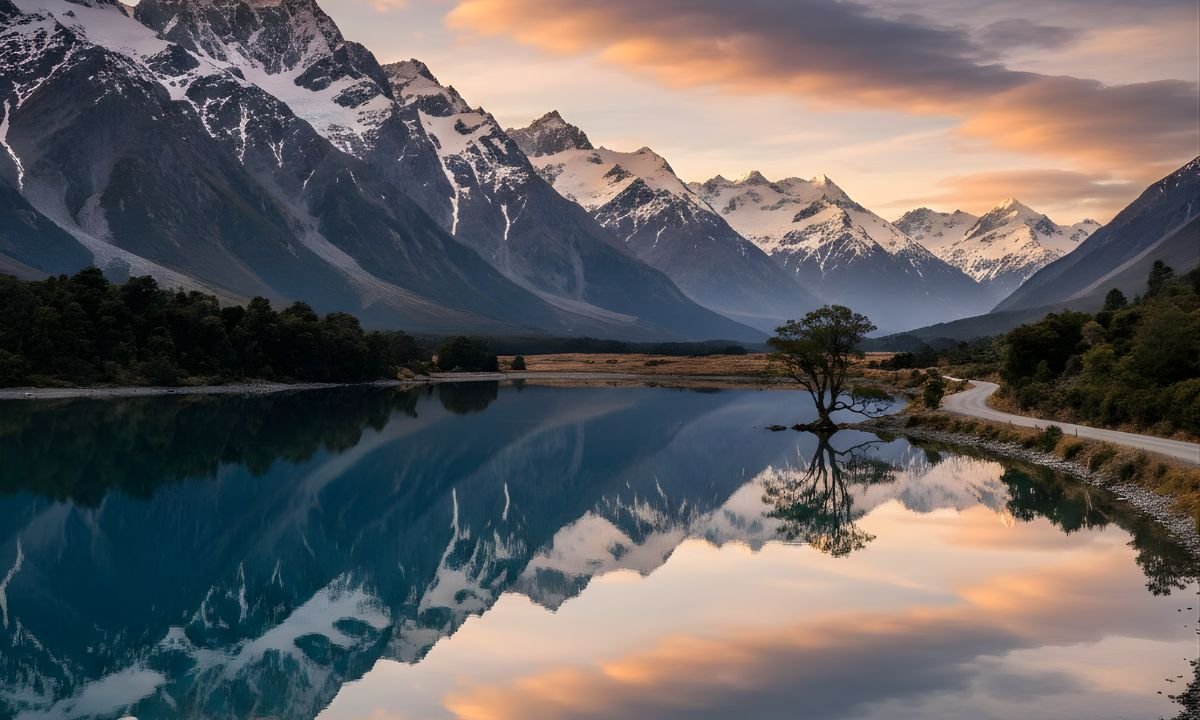

New Zealand is one of those rare places where mountains, mirror-still lakes and big skies come together so perfectly that every bend in the road feels like a postcard come to life. From the Southern Alps to Fiordland’s reflective waters, the country offers safe, well-marked ways for travellers of all levels to enjoy its landscapes responsibly.
South Island: Where Mountains Meet the Sky
Most travellers start their mountain journey on the South Island, where the Southern Alps form a dramatic spine running almost the full length of the island. Here you find famous peaks like Aoraki/Mount Cook, plus countless unnamed ridges that glow pink and gold at sunrise and sunset.
For first-time visitors, basing yourself in Queenstown, Wānaka or Tekapo keeps you close to well-maintained roads, signposted walking tracks and accredited tour operators. These hubs offer everything from scenic flights and gondola rides to gentle lakeside walks, so you can enjoy big mountain views without taking unnecessary risks.
Mirror Lakes and Fiordland’s Quiet Magic
Fiordland National Park, a UNESCO World Heritage area, is home to the famous Mirror Lakes along the road from Te Anau to Milford Sound. On calm days, these small oxbow lakes perfectly reflect the Earl Mountains, creating a surreal, almost symmetrical landscape that photographers love.
The short Mirror Lakes walk is on an easy, accessible boardwalk right beside the highway, making it suitable for families, older travellers and anyone who prefers shorter, safer stops. Information panels explain how the Eglinton River changed course to form these lakes, adding a layer of natural history to your photos and helping visitors understand why staying on the track protects delicate wetland habitats.
Sample Planning Data for Fiordland Highlights
This kind of simple planning helps you pace the Milford Road safely, avoid rushing between stops, and choose activities that match your energy level and experience.
Epic Views on Foot: Safe Day Hikes
New Zealand’s Department of Conservation (DOC) manages a huge network of walking tracks that are graded by difficulty and clearly signposted, which is a major safety advantage for visitors. In mountain regions, many of the most rewarding viewpoints are actually on short- to medium-length day walks, not just multi-day hikes.
Near Queenstown and Wānaka, popular half-day tracks climb to lookouts over lakes and snow-capped peaks, while in Fiordland, short walks off the Milford Road reveal mossy forests, rivers and hanging valleys. Checking local weather forecasts, carrying basic rain protection and staying on marked tracks are simple habits that align with New Zealand’s “safety first” approach to outdoor adventure.
Responsible Travel and Nature Protection
One of the strongest messages you’ll see around New Zealand’s natural attractions is about travelling responsibly—protecting landscapes while you enjoy them. Signs at trailheads and car parks often remind visitors not to litter, to use toilets where provided and to avoid feeding wildlife, because even small actions can disturb fragile ecosystems.
In wetland areas like Mirror Lakes, boardwalks and viewing platforms are deliberately built to keep feet off sensitive ground while still delivering incredible views. By following these guidelines and choosing operators who follow environmental best practice, travellers help keep lakes clear, forests healthy and trails open for future visitors.
Fitting New Zealand into Your Discover Feed Plans
If you plan to create content about New Zealand’s natural beauty, the latest February 2026 Google Discover update places fresh emphasis on local relevance, originality and topic-level expertise. That means articles grounded in real travel experience, practical safety guidance and honest expectations are more likely to perform well than generic listicles or clickbait headlines.
Google’s E-E-A-T focus for travel content favours writers who demonstrate experience on the ground, clear knowledge of local conditions and a transparent, user-first approach. Including details like access points, track style, estimated times and responsible behaviour not only helps readers plan safer trips, it also builds long-term trust in your work as a reliable guide to places like New Zealand’s mountains and mirror lakes.
