
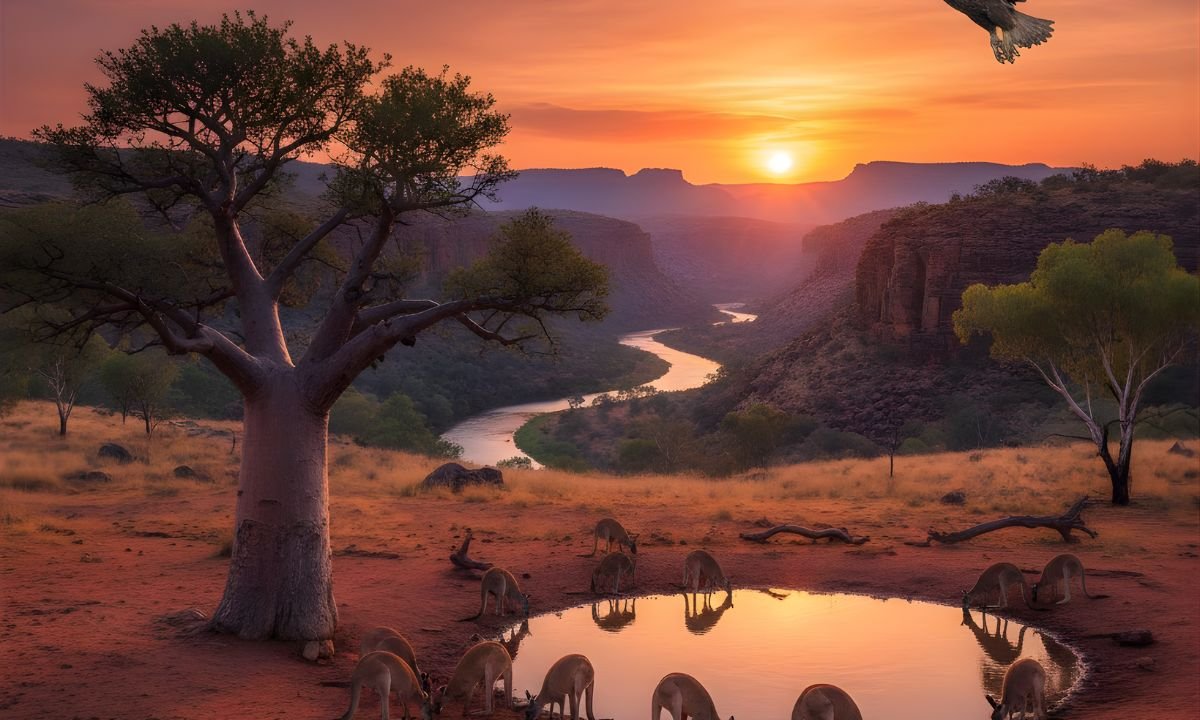

Exploring wild Australia means stepping into a continent‑sized sanctuary where ancient landscapes, rare wildlife, and deep Aboriginal wisdom still shape everyday life. This guide takes you through the country’s untamed side in a way that is practical, trustworthy, and safe for real travellers and nature lovers alike.
Australia’s Wild Heart: Land of Contrasts
Australia is often imagined as a sun‑burnt outback, but its wild side actually stretches from tropical rainforests and red deserts to alpine peaks and storm‑beaten coasts. The country spans multiple climate zones, which is why you can watch whales in the cold Southern Ocean and snorkel with turtles on the same trip if you plan your route well.
This variety is not just beautiful; it also shapes when and where you see wildlife at its best. Dry seasons in the tropical north, cooler months in the outback, and shoulder seasons along the coasts all offer different experiences, so aligning your visit with seasonal changes is one of the safest and most rewarding ways to explore.
Iconic Wild Regions You Should Know
Some regions stand out as natural “classrooms” for understanding Australia’s wild character. Kakadu National Park in the Northern Territory mixes sandstone escarpments, crocodile‑filled wetlands, and rock art sites that have been cared for by Aboriginal communities for tens of thousands of years. Guided experiences here help you interpret landscapes respectfully and stay safe around powerful rivers and wildlife.
Further south, Kangaroo Island off the coast of South Australia functions almost like an open‑air wildlife sanctuary. Sea lions rest on protected beaches, koalas cling to eucalypts, and kangaroos graze at dawn and dusk, giving visitors a rare chance to observe animals behaving naturally rather than in staged settings.
Snapshot of Wild Australia at a Glance
The table below gives a quick reference to some of the most popular wild regions and what they are known for, so you can compare experiences and plan responsibly.
Living with Wildlife: Encounters That Respect Nature
Australia’s wildlife is famous for being unique, not for being tame, and that distinction matters for both your safety and the animals’ wellbeing. In places like the Daintree Rainforest, patient visitors can glimpse elusive cassowaries and tree‑kangaroos, but responsible operators will always ask you to keep your distance and never leave food, because human feeding quickly leads to aggressive behaviour and vehicle collisions.
On the coasts and islands, sea lions, dolphins, and whales create unforgettable scenes, yet the most ethical tours keep boats at regulated distances and limit group sizes to avoid stress on breeding colonies and migration routes. Choosing operators with clear conservation policies and accreditation is one of the most concrete ways you can support trustworthy, nature‑first tourism.
Culture, Responsibility, and the New Discover Era
Many wild Australian landscapes are also living cultural sites, and listening to Aboriginal guides is essential if you want context that goes beyond scenery. In areas around Uluru and Kakadu, local custodians explain seasonal changes, traditional fire practices, and sacred storylines, helping visitors understand why some areas are closed, some viewpoints are preferred, and why photography is restricted in specific locations. This cultural layer deepens your experience and reduces the risk of unintentionally disrespecting local law and custom.
From a digital perspective, the latest Discover and E‑E‑A‑T standards are pushing travel content in a healthier direction by rewarding first‑hand experience, careful sourcing, and clear safety guidance over clickbait and exaggerated promises. Discover’s February 2026 core update, for example, emphasises locally relevant, original, and non‑sensational articles, which aligns closely with detailed, on‑the‑ground reporting from specific regions rather than generic listicles.
Planning a Safe, Low‑Impact Wild Adventure
Exploring wild Australia responsibly starts long before you board a flight, with choices about where you stay, how you move, and which activities you support. Eco‑lodges near national parks, small‑group wildlife tours, and reef or rainforest experiences with transparent conservation programs all help direct your spending toward operators that protect the environments you are travelling to see.
On the ground, simple habits—staying on marked tracks, packing out all rubbish, following local fire regulations, and reading park alerts—make a measurable difference to erosion, wildlife stress, and bushfire risk. If you treat each landscape as someone’s long‑guarded home rather than an untamed playground, you will come away with richer memories and help ensure that Australia’s wild beauty remains intact for future explorers.
