
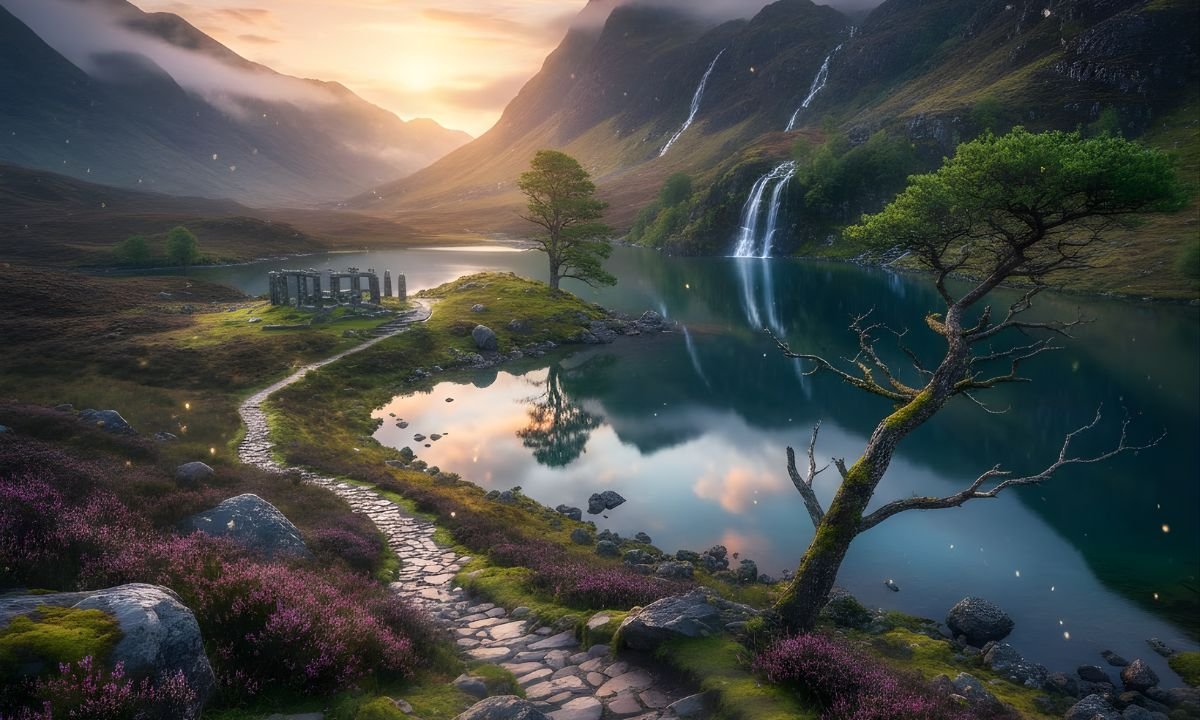

Scotland’s rugged terrain hides some of the world’s most stunning natural wonders, far from crowded tourist trails. These undiscovered landscapes offer raw beauty, serenity, and a deep connection to ancient wilderness that will leave you breathless. Drawing from trusted sources like VisitScotland and NatureScot, this guide highlights safe, lesser-known spots perfect for mindful exploration.
Glen Affric’s Ancient Whisper
The area’s rich biodiversity, protected since Victorian times, includes rare plants and birds, making it a haven for nature lovers who prioritize low-impact visits. Pack layers for changeable weather, stick to marked paths to protect the fragile ecosystem, and arrive early to avoid even the sparse fellow adventurers.
Sandwood Bay’s Remote Paradise
On Sutherland’s wild northwest coast, Sandwood Bay emerges as a secluded gem with its mile-long pristine beach backed by towering dunes and the dramatic sea stack Am Buachaille. This untouched stretch, about five miles south of Cape Wrath, rewards a moderate 4-mile hike from the car park with turquoise waves crashing against golden sands, often empty save for seals basking nearby. The sense of isolation here amplifies the breathtaking drama, as freshwater Sandwood Loch peeks behind the dunes, inviting quiet reflection.
Hiking safely means checking tides via official apps and carrying Ordnance Survey maps, as signal is spotty—ensuring you savor the views without risk. Local conservation efforts keep this bay pristine, underscoring why it’s a must for eco-conscious travelers craving authentic Highland solitude.
Glen Lyon’s Endless Serenity
Stretching 34 miles through Perthshire, Glen Lyon earns its title as Scotland’s longest and loneliest glen, once praised by Sir Walter Scott as the “loveliest” of its kind. Flanked by heather-clad hills and the winding River Lyon, this national scenic area unfolds with emerald pastures, ancient corries, and misty lochans that shift from golden sunrise to purple dusk hues. A simple drive or gentle riverside walk reveals hidden bothies and folklore-rich spots like Fortingall, home to Europe’s oldest tree.
Safety comes first: roads narrow, so drive cautiously, and wild camp responsibly under Scotland’s right-to-roam laws. This glen’s profound peace draws photographers and walkers yearning for unspoiled Highland essence.
Falls of Glomach’s Thundering Drop
Tucked in Kintail near Kyle of Lochalsh, Falls of Glomach boasts one of Britain’s highest waterfalls, plunging nearly 370 feet through a narrow gorge into frothing pools below. The strenuous 4-mile path from Morvich winds through oakwoods and heather moors, building anticipation until the roar echoes ahead, mist rising like Highland spirits. Post-rain, the cascade’s power steals your breath, framed by rugged Five Sisters of Kintail peaks.
Experienced hikers recommend sturdy boots, rain gear, and AllTrails for navigation, heeding “danger” signs near the edge for secure viewing. This remote powerhouse exemplifies Scotland’s dramatic water-sculpted landscapes, preserved for respectful adventurers.
Tranquil Depths of Loch Maree
In Wester Ross, Loch Maree captivates as the northwest Highlands’ largest loch, a 13.5-mile mirror of Slioch mountain and Beinn Eighe reserve’s pines. Tree-cloaked islands dot its glassy surface, home to otters, pine martens, and sea eagles, creating a symphony of ripples and calls that soothe the soul. Short shoreside paths offer effortless access to viewpoints, where the water’s stillness reflects a palette of greens and blues under vast skies.
Visit responsibly by using designated parking and avoiding off-path wandering to safeguard this scenic icon. Its accolades for habitats and views affirm why Loch Maree remains a breath-stealing secret for peaceful Highland immersion.
Glen Etive’s Cinematic Majesty
Extending from Glencoe, Glen Etive channels raw Highland drama with its 18km River Etive snaking between Buachaille Etive Mor and mist-shrouded hills. Famous in films yet rarely mobbed, the valley’s winding road reveals emerald meadows, cascading burns, and deer herds against moody backdrops that shift hourly. Wild swimming or picnics by the river amplify the awe, as golden light bathes the scene in ethereal glow.
Stay safe with weather checks and vehicle prep for single-track roads; it’s ideal for those blending drive and light exploration. Glen Etive’s wild residents—eagles, squirrels, rare flora—thrive thanks to community conservation, inviting you to witness Scotland’s untamed heart.
FAQs
Q1 How do I reach these spots safely?
Use OS maps, check weather via Met Office, and park at official spots; hikes range 2-6 hours.
Q2 Best time to visit?
May-September for milder weather and longer days, avoiding midges in July-August.
Q3 Are permits needed?
No, but follow Leave No Trace; wild camping ok with rules.
