
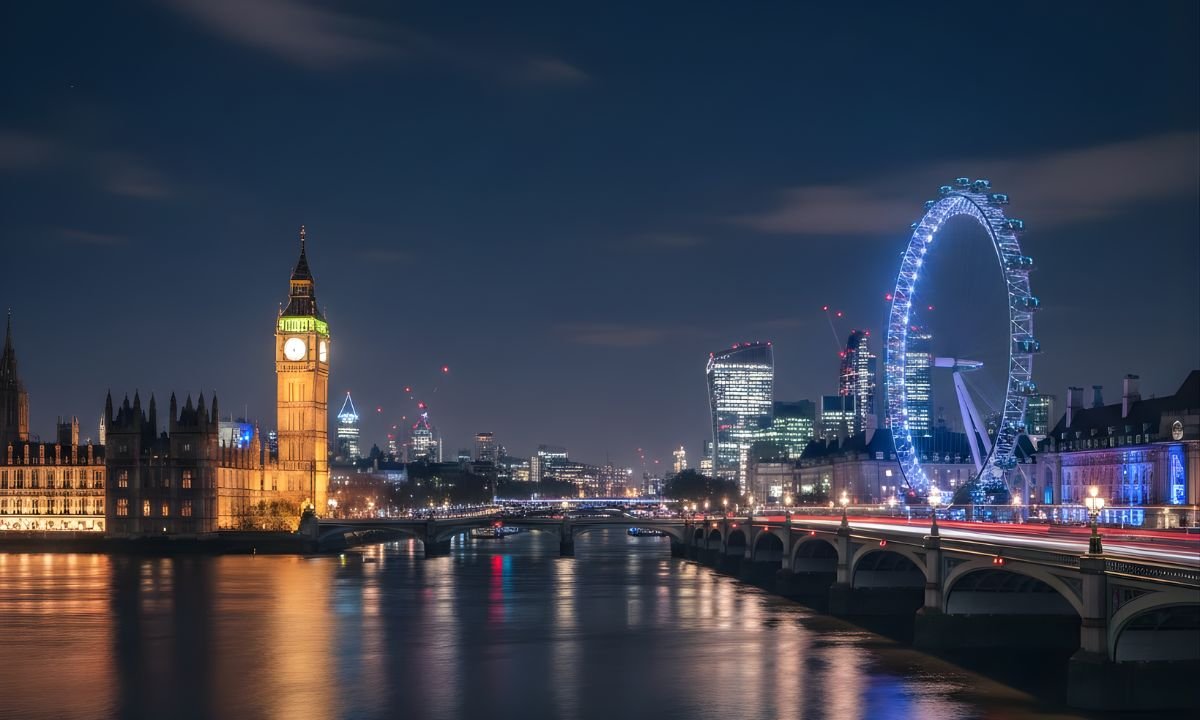

London at night is a dream playground for photographers, with glowing landmarks, shimmering reflections on the Thames, and lively streets that feel completely different after dark. With the right techniques and a mindful approach to safety and ethics, you can capture iconic cityscapes that look dramatic yet natural, and stand out in modern visual feeds like Google Discover.
Understanding London After Dark
London transforms when the sun goes down: office towers light up, bridges glow in bold colours, and the river becomes a mirror for neon and streetlamps. This change in atmosphere is ideal for night photography because it introduces contrast, reflections, and leading lines that are much harder to find in daylight.
For cityscapes, focus on locations that combine architecture, water, and movement, such as Westminster Bridge looking towards the London Eye, the Millennium Bridge and St Paul’s Cathedral, or the South Bank with views towards the City skyline. These spots offer strong compositions that work well for long exposures, giving you silky water and light trails without needing heavy manipulation in post-processing, which supports authenticity and trust in your images.
Essential Camera Settings and Techniques
Shooting London’s cityscapes at night is all about balancing light, sharpness, and noise. Start with a low ISO (around 100–400) if you are on a tripod to keep noise under control, then use a narrow aperture like f/8–f/11 to ensure sharp details from foreground to background. Shutter speed can range from a few seconds to 30 seconds or more, depending on how much movement you want in the water, clouds, or traffic lights.
A sturdy tripod and remote shutter (or camera self-timer) are essential to avoid camera shake during long exposures. Turn off image stabilisation when the camera is mounted on a tripod, and use manual focus or focus on a bright contrast edge (like a lit sign or building edge) to ensure your subject is crisp. These straightforward practices keep your images technically strong without needing gimmicks, aligning with Google’s preference for high-quality, honest, expert content.
Sample Night Settings Cheat Sheet
Iconic Spots for Cityscape Drama
Some locations naturally lend themselves to powerful night images because they combine iconic architecture and controlled light. From Westminster Bridge you can frame the London Eye and County Hall, using the river and piers as foreground interest, while from the South Bank you get classic views of Blackfriars Bridge, St Paul’s Cathedral, and the City skyline glowing in the distance.
The Millennium Bridge is another favourite, especially when you line up a symmetrical composition that leads straight to the dome of St Paul’s. If you want something higher, the viewing platform at Tate Modern offers sweeping views across the river and into the heart of the City, helping you capture the scale of London’s illuminated skyline without needing risky or restricted rooftop access. Choosing legal, public vantage points like these supports safe and responsible practice, which is a key part of trustworthy photography content.
Safety, Ethics, and Trustworthy Practice
Night photography demands extra attention to personal safety and respect for others. Stick to well-lit, busy areas like the South Bank, Westminster, and central bridges, and keep valuables secure and close to your body when setting up your tripod or changing lenses. If you are working alone, tell someone where you plan to shoot and when you expect to finish, and avoid wandering into isolated alleyways or construction zones for the sake of an unusual angle.
Ethically, be mindful of people’s privacy: avoid aggressively photographing individuals in vulnerable situations, and respect signage around sensitive buildings or security-conscious areas. When you share or publish your images, be transparent about your process—state when you used long exposures, composite techniques, or heavy editing—because openness builds trust and aligns with Google’s E-E-A-T focus on honest, experience-based content.
Shooting for Discover and Long-Term Value
The February 2026 Google Discover update places more emphasis on local relevance, originality, and non-sensational content. To align your London night photography articles or galleries with this, combine practical tips with your own on-the-ground experience: describe the weather you faced, how crowded a location was, and what settings actually worked for you on a particular bridge or riverside spot.
Avoid clickbait headlines and unrealistic promises; instead, use clear titles and subheadings that genuinely reflect your content, such as guides to specific viewpoints or step‑by‑step walkthroughs for capturing a single landmark at night. Adding author bylines, short bios that highlight your experience shooting in London, and accurate EXIF or gear notes all reinforce expertise and authority, helping both readers and algorithms recognise your work as reliable and safe to recommend.
FAQs
Q1. Do I need a tripod for London night cityscapes?
A tripod is strongly recommended for sharp long exposures of skylines, rivers, and bridges, especially when you want clean light trails and low ISO files.
Q2. Is it safe to shoot night photography alone in London?
Many central areas are busy and well lit, but you should still stay aware of your surroundings, avoid isolated spots, and keep your gear discreet.
Q3. Which lens is best for London night cityscapes?
A wide-angle lens (around 16–35mm on full-frame) works well for sweeping skylines and bridges, while a fast prime is useful for handheld street scenes.
