
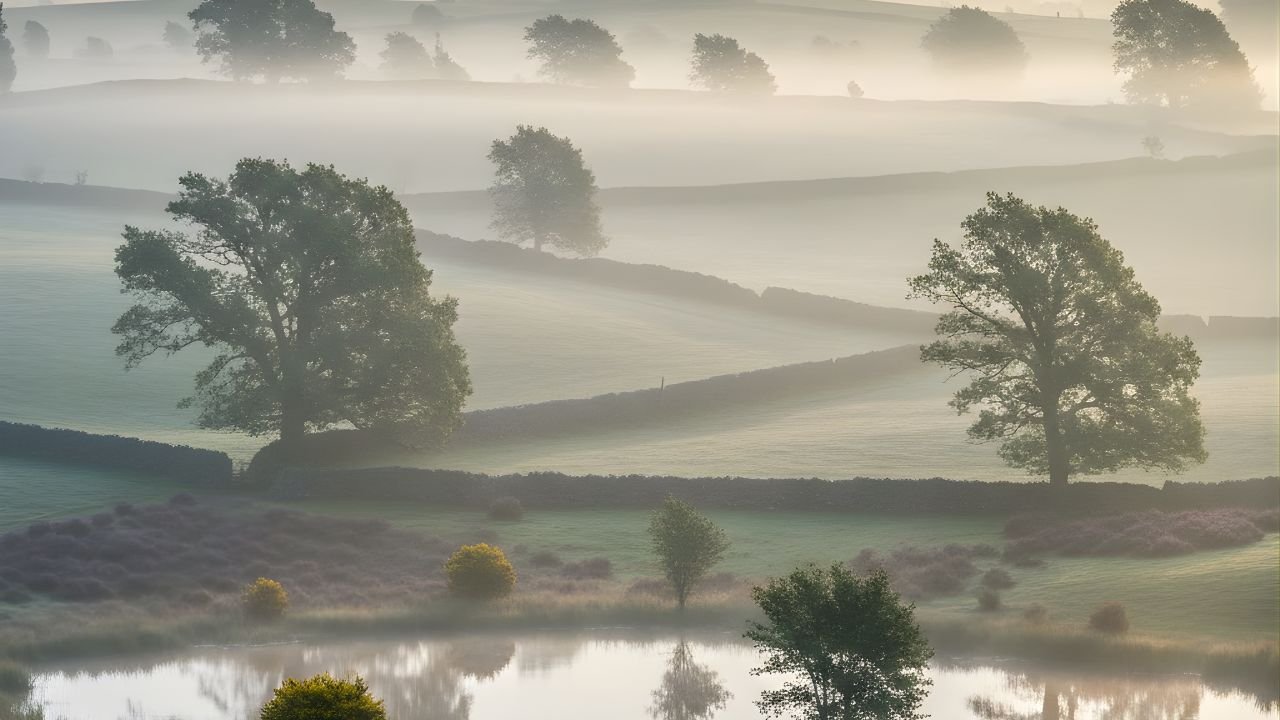

Magical misty mornings in the UK countryside offer a rare mix of soft light, drifting fog and quiet landscapes that feel almost otherworldly, making them perfect for thoughtful travel and photography stories. When you approach them with care, local awareness and respect for nature, they become not just beautiful scenes but safe, memorable experiences you can keep returning to over the years.
The Quiet Magic of Misty Mornings
When mist hangs over rolling fields, stone walls and hedgerows, it softens every outline and turns familiar places into something new and mysterious. In the UK, this kind of atmospheric mist appears most often on cool, still mornings when the air is moist and the ground has cooled overnight, especially near rivers, lakes and low-lying valleys.
What makes these scenes so captivating is the way mist filters light. As the sun rises, it glows through the haze, creating gentle gradients of colour rather than harsh shadows, which is why so many landscape photographers set their alarms long before dawn. Even simple subjects—a lone oak tree, a stone cottage, or grazing sheep—take on a storybook quality when half-hidden by drifting fog.
Safe and Respectful Countryside Exploration
To enjoy misty mornings safely, it helps to plan with both the landscape and local communities in mind. Visibility can be low on narrow lanes and footpaths, so wearing high‑visibility layers, carrying a small torch and keeping to marked public rights of way reduces risk for both walkers and drivers. Checking local weather forecasts and sunrise times before you leave means you are less likely to be caught out by fast‑changing conditions.
Respect for farmland is essential, especially when field boundaries are hidden in the haze. Closing gates, avoiding crops, and giving livestock plenty of space protect both the animals and your own safety. Many National Parks and local councils publish clear access guidelines online, and following these helps keep the countryside welcoming for future visitors while aligning with modern expectations of trustworthy, responsible travel content.
Simple Techniques for Capturing the Mood
You do not need advanced gear to capture the mood of a misty morning, but a few practical choices make a big difference. Photographers often favour aperture‑priority mode so they can control depth of field, and they may switch to manual focus when the camera struggles to lock onto low‑contrast subjects in thick mist. Because mist can trick meters into under‑ or over‑exposing a scene, gently adjusting exposure compensation helps preserve detail in both highlights and shadows.
Longer focal lengths can compress layers of trees, hills and hedgerows, emphasising the sense of depth as each layer fades further into the fog. For colour, a daylight white‑balance setting tends to preserve the cool blue tone of the early morning, while a tungsten setting can push those blues even further if you want a slightly dreamlike feel. Keeping a soft cloth handy to wipe away tiny water droplets from your lens is another small but important habit on damp mornings.
Typical Misty Morning Conditions in the UK
The table below summarises common conditions you are likely to encounter on a calm, misty morning in the UK countryside and how they affect both safety and photography.
These conditions vary by region, but they give a useful starting point when planning early‑morning trips into the countryside.
Creating Trustworthy, Human‑Centred Travel Stories
If you hope your misty‑morning stories or photos reach more readers through platforms like Discover, it helps to focus on genuine experience rather than exaggerated claims. Google’s recent Discover update puts more weight on content that feels local, original and grounded in real expertise, and that means clearly describing where you went, what you noticed first‑hand, and how others can stay safe if they follow in your footsteps. Instead of generic tips, sharing specific examples—like the sound of distant church bells through fog in the Cotswolds or the way dew gathers on spiderwebs along a Yorkshire footpath—signals real human experience.
Trust also grows when you are transparent about limitations. Mist can arrive later than forecast or lift sooner than you hoped, and acknowledging that uncertainty prevents readers from forming unrealistic expectations. Recommending simple backups—such as exploring a village café or nearby woodland if conditions do not cooperate—shows that you value your audience’s time, money and safety as much as their photographs.
Returning to the Same Landscape
One of the quiet pleasures of misty mornings is revisiting the same lane, hill or riverside through the seasons to see how light and weather reshape it. On some days the fog will be thick and enclosing, on others it will appear only as a faint veil across distant hills, but each visit deepens your understanding of the place and your confidence moving through it. Over time, these repeated, respectful encounters with the landscape build the kind of lived experience that underpins strong, trustworthy storytelling and satisfies modern expectations for both quality and authenticity in travel content.
FAQs
Q1. What is the best time of year for misty mornings in the UK countryside?
Cool late summer and autumn mornings, especially around September and October, often bring reliable mist when nights are clear and days remain mild.
Q2. Do I need a professional camera to photograph misty mornings?
No, a basic camera or modern smartphone can work well if you watch your exposure, keep the lens clean and arrive early enough to catch the changing light.
Q3. Is it safe to drive in rural areas during heavy mist?
It can be safe if you slow down, use dipped headlights, watch for walkers and wildlife, and avoid sudden stops or overtaking on narrow, twisting lanes.
