
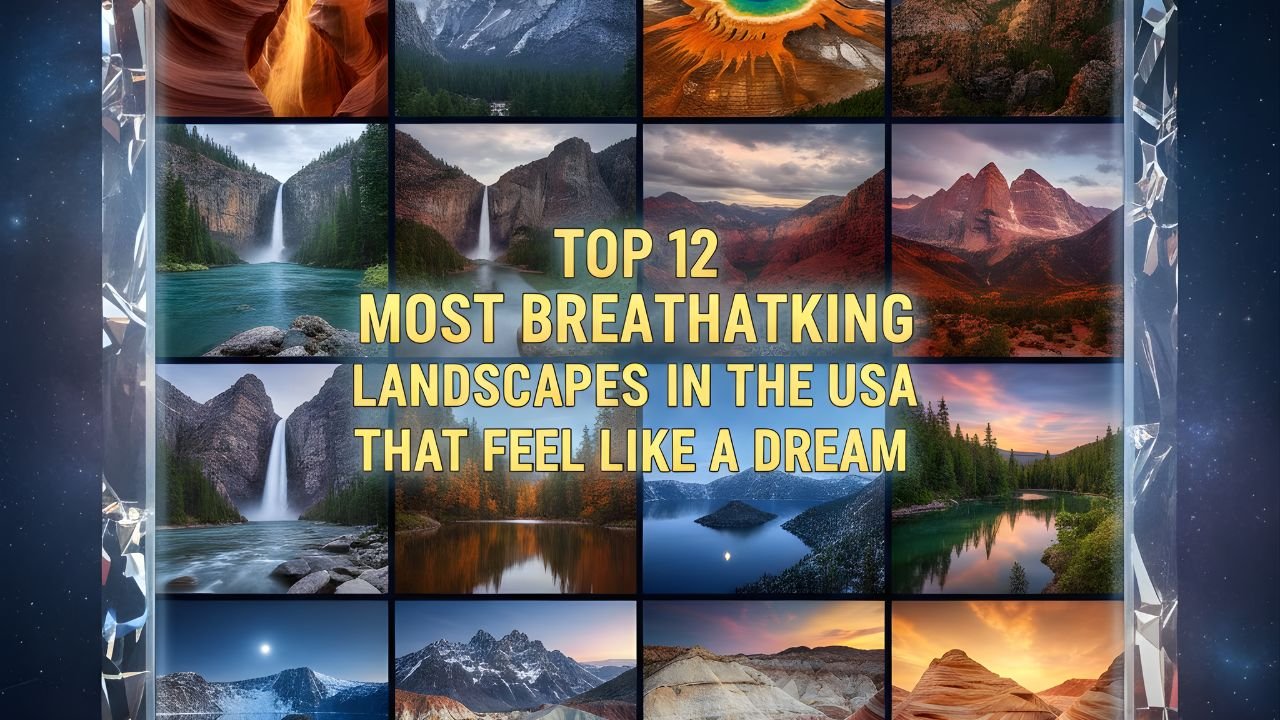
Top 12 Most Breathtaking Landscapes in the USA That Feel Like a Dream

Top 12 Most Breathtaking Landscapes in the USA That Feel Like a Dream

User avatar placeholder
Written by Brian Charles

March 5, 2026

The United States boasts some of the world’s most mesmerizing natural landscapes, where towering cliffs, vibrant hot springs, and endless dunes create scenes that seem pulled from a fantasy realm. These dreamlike destinations draw millions of adventurers each year, offering profound connections to nature’s artistry. Drawing from extensive explorations documented by seasoned travelers and national park experts, here are the top 12 breathtaking spots that redefine surreal beauty.

Grand Canyon Majesty

Horseshoe Bend of the Colorado River in Arizona Carved by the Colorado River over millions of years, the Grand Canyon in Arizona stretches 277 miles long and plunges over a mile deep, revealing layered rock formations in hues of red, orange, and purple that shift dramatically with the sunlight. Standing at the South Rim’s Mather Point, the vast chasm unfolds like an endless painting, where rafters below appear as tiny specks against the immense scale. This iconic wonder, protected since 1919 as a national park, hosts over 4.7 million visitors annually, many hiking the Bright Angel Trail for intimate views of its hidden side canyons.

Yosemite’s Granite Dreams

In California’s Sierra Nevada, Yosemite National Park enchants with sheer granite monoliths like El Capitan and Half Dome rising dramatically from lush valleys, framed by thundering waterfalls such as Yosemite Falls, North America’s tallest at 2,425 feet. Mist trails and ancient sequoias add to the ethereal fog that often cloaks the scene at dawn, making it feel like stepping into a mythical realm. Photographers and climbers flock here for its raw power, with over 800 miles of trails revealing hidden groves and crystal-clear streams.

Antelope Canyon’s Light Magic

Page, Arizona’s Antelope Canyon, a Navajo-owned slot canyon, captivates with smooth, flowing sandstone walls sculpted by flash floods into wavy patterns of crimson and gold. Sunbeams pierce narrow openings from March to October, casting luminous shafts that dance on the rippled floors, creating an otherworldly glow celebrated in countless photographs. Guided tours ensure safe exploration of Upper and Lower sections, emphasizing the site’s sacred Navajo heritage and fragile ecosystem.

Quick Overview Table

Landscape State Key Feature Best Time to Visit Approx. Annual Visitors
Grand Canyon Arizona Mile-deep chasm Spring/Fall 4.7 million
Yosemite California Granite cliffs, waterfalls Summer 3.5 million
Antelope Canyon Arizona Slot canyon beams March-Oct 1 million
Grand Teton Wyoming Jagged peaks, lakes Summer 2.8 million
Bryce Canyon Utah Hoodoo spires Spring/Fall 2.3 million
Yellowstone Wyoming Geothermal springs Summer 4.1 million
Zion Utah Towering canyons Spring/Fall 4.3 million
Horseshoe Bend Arizona River bend overlook Anytime 2 million
White Sands New Mexico Gypsum dunes Fall/Spring 600,000
Acadia Maine Rugged coast Fall 3.5 million
Glacier Montana Alpine lakes, glaciers Summer 3 million
Crater Lake Oregon Deep blue caldera Summer 500,000

Grand Teton Serenity

Wyoming’s Grand Teton National Park features razor-sharp peaks soaring over 7,000 feet above Jackson Lake and Jenny Lake, their snow-capped summits mirroring perfectly in turquoise waters on calm mornings. Wildlife like moose and grizzlies roam wildflower meadows, enhancing the pristine alpine paradise that feels untouched by time. Snake River overlooks provide postcard vistas, ideal for kayaking or hiking the 200+ miles of paths.

Bryce and Zion Wonders

Bryce Canyon hoodoos with red rock spires and distant pines Utah’s Bryce Canyon dazzles with thousands of delicate hoodoos—tall, thin spires of limestone in vibrant pinks and oranges—best seen from Sunrise or Sunset Points at dawn or dusk. Nearby Zion National Park offers vertigo-inducing views from Angels Landing, where sheer red cliffs channel the Virgin River through narrow slots like The Narrows. These parks, part of the Mighty Five, showcase erosion’s artistry over eons, drawing hikers to immerse in slot canyons and amphitheaters.

Geothermal Marvels

Grand Prismatic Spring in Yellowstone with tourists on boardwalk Yellowstone National Park in Wyoming, the world’s first national park established in 1872, bubbles with surreal geothermal features, including the rainbow-hued Grand Prismatic Spring, the U.S.’s largest hot spring at 370 feet wide. Old Faithful geyser erupts predictably, while bison herds roam steaming valleys, blending raw wilderness with volcanic drama. Boardwalks protect these delicate thermal areas, where colors from heat-loving bacteria create living palettes.

Coastal and Desert Fantasies

White Sands National Park dunes under blue sky Horseshoe Bend near Page offers a dizzying 1,000-foot drop to the Colorado River’s meandering U-turn, a photographer’s dream under golden hour light. New Mexico’s White Sands National Park spans 275 square miles of pure white gypsum dunes, mimicking a snowy Sahara where visitors sled and stargaze amid rippling waves. Acadia’s Ocean Path in Maine crashes waves against Cadillac Mountain’s rocky shores, blending Atlantic drama with forested peaks for East Coast magic.

Northern Alpine Gems

Acadia National Park rocky coastline with crashing waves and evergreen trees Montana’s Glacier National Park preserves over 700 miles of trails amid retreating glaciers and Going-to-the-Sun Road’s hairpin engineering, revealing turquoise lakes like Hidden Lake beneath bear grass meadows. Oregon’s Crater Lake, formed in a 7,700-year-old volcanic caldera, holds the deepest U.S. lake at 1,943 feet, its vivid blue defying reality year-round. These remote jewels emphasize conservation, with ranger-led programs highlighting climate impacts and wildlife corridors.

These landscapes not only stun the senses but inspire stewardship, as national parks manage overcrowding through timed entries and Leave No Trace principles for future generations. Safe travels begin with preparation—check weather, pack essentials, and respect wildlife distances.

FAQs

Q1 What is the best time for Grand Canyon visits?

Spring or fall avoids summer heat and crowds.

Q2 Are guided tours required for Antelope Canyon?

Yes, for safety and Navajo access.

Q3 How deep is Crater Lake?

 About 1,943 feet, the deepest in the U.S

Image placeholder

Brian Charles Steel is a U.S.-based photographer specializing in urban portraits, travel photography, and visual storytelling. His work focuses on capturing authentic moments across American cities — from quiet morning streets to vibrant downtown neighborhoods.

Leave a Comment